Featured
Table of Contents
Adapting to Semantic Browse in 2026
The shift in how info is indexed and retrieved has reached a tipping point this year. In 2026, search engines no longer focus on simple keyword matching. Rather, they focus on semantic understanding-- interpreting the intent and context behind every user question. For companies attempting to preserve an existence in Toronto, this suggests content production needs to move far from volume for the sake of volume. The objective is now details gain, a metric that benefits content for supplying new, factual details that do not exist somewhere else on the web.Steve Morris, CEO of NEWMEDIA.COM, has actually often noted in recent industry conversations that the increase of Answer Engine Optimization (AEO) and Generative Experience Optimization (GEO) has required an overall rewrite of the traditional marketing playbook. Companies can no longer hide thin material behind high backlink counts. The systems powering search in 2026 are trying to find topical authority and entity-based relevance. This requires a technique where every piece of content serves a specific function within a broader understanding graph.
Intelligence-Led Production Techniques for Digital Marketing
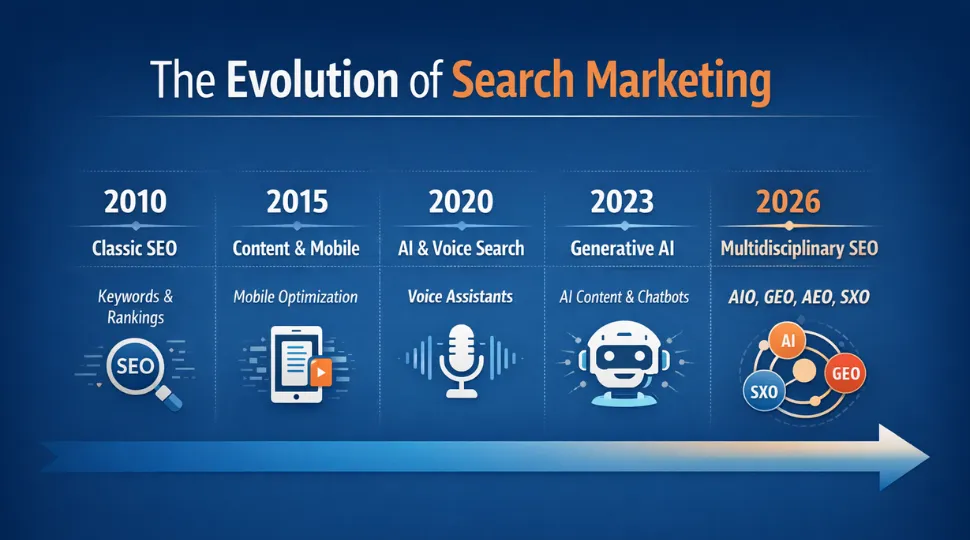
Scaling a material department without losing the human touch or accurate precision includes more than simply adding more writers or more AI prompts. It needs a layer of material intelligence that sits between the ideation stage and the final publication. Organizations are progressively trying to find ways to improve Search Consulting to ensure that every article or video produced aligns with what semantic algorithms are really searching for. This intelligence layer utilizes data to identify gaps in the existing market knowledge, ensuring that new material offers real value.The RankOS platform has actually ended up being a central part of this procedure for many companies, as it allows for real-time tracking of AI search visibility. In cities like Denver, Chicago, and Nashville, where the company environment is particularly dense, the capability to see how an AI summary analyzes a brand name's message is vital. Material intelligence tools examine top-performing entities and recommend particular subtopics that an author ought to cover to achieve "topical efficiency." This data-driven approach makes sure that even when production scales to numerous pieces per month, every one stays premium and pertinent to the user.
Scaling Quality Across the Region and Beyond
Maintaining a consistent brand name voice throughout different geographic locations presents a special set of hurdles. Whether a business is operating in the local territory or across multiple seaside offices like NYC and LA, the tone should stay unified while the information remain regional. Professional Core Web Vitals Optimization offers a methodology for handling this balance. By utilizing centralized style guides and AI-assisted fact-checking, groups can produce localized material that does not seem like a generic template.The technical requirements for content in 2026 also include structured data that helps online search engine classify information. This is no longer almost fundamental Schema markup. It is about defining the relationships in between items, services, and areas. For a service with a presence in Dallas, Atlanta, or Miami, the material should clearly link these geographic entities to their core service offerings. This develops a web of significance that is tough for rivals to break, particularly when the production scale is high enough to cover every specific niche topic within a particular industry.
The Role of Human Oversight in AI-Driven Workflows
While AI tools handle the heavy lifting of preliminary drafts and information analysis, the "last mile" of material production stays a human endeavor. In 2026, the most effective material groups are those that use AI to expand their reach however rely on knowledgeable editors to make sure brand name alignment and psychological resonance. Steve Morris has typically pointed out that while AI can mimic realities, it battles with the nuanced viewpoint that comes from years of industry experience. Quality assurance in 2026 includes a strenuous multi-step procedure. Content intelligence tools recommend a brief based on semantic spaces. Second, a writer or an extremely tuned AI creates a draft. Third, an editor examines the piece for "AI hallucinations"-- those moments where a model may with confidence mention a fact that is really inaccurate. The piece is enhanced for AEO to guarantee it is selected up by the conversational interfaces that now control how individuals find information in global markets.
Determining Success in the Age of AEO and GEO

Traditional metrics like click-through rates (CTR) and page views are still kept an eye on, but they are no longer the only method to determine the success of a content program. In 2026, visibility within AI-generated summaries is the new gold standard. If a brand is discussed as a top suggestion in a search engine's conversational reaction, that is a clear sign of high topical authority. Success often depends on AI Optimization for Search. This means tracking how often a brand appears as a mentioned source in the responses offered by contemporary search systems.The concentrate on GEO-- Generative Experience Optimization-- means that content should be formatted in a manner that AI designs can easily parse. This includes utilizing clear headings, bulleted lists for factual information, and concise summaries at the beginning of long-form pieces. When these technical elements are combined with top quality writing, the outcome is a content engine that can scale forever.
Future-Proofing Your Method in Toronto
As we move further into 2026, the space between low-quality "AI spam" and premium, intelligence-led content will only expand. Companies that attempt to shortcut the process by pumping out unverified, non-optimized text will discover themselves unnoticeable in the brand-new search era. Business that grow are those that invest in the right platforms and individuals to manage production at scale.Working with an agency that understands the intersection of SEO, AEO, and website design is often the most effective course forward. With workplaces covering from NYC to LA, NEWMEDIA.COM supplies a broad point of view on how different markets respond to these technological shifts. By focusing on semantic significance and information gain, they assist brand names construct a digital footprint that is both expansive and authoritative.Ultimately, scaling material production in 2026 has to do with being smarter, not simply much faster. It has to do with using the RankOS platform to recognize where the chances lie and then carrying out with a level of precision that makes every word count. Whether the goal is to dominate the local search engine result in Toronto or to construct a nationwide existence, the concepts of quality and semantic clarity stay the same. The future of digital marketing comes from those who can produce high volumes of content that search engines trust and users discover genuinely helpful.

Latest Posts
SEO Vs PPC: Navigating the Digital Landscape
Ways to Strengthen Your Brand Identity for 2026
How Charlotte Groups Are Browsing Semantic Algorithm Moves